
Field Preparation for American Elderberry
Build a Strong Foundation for Long-Term Success
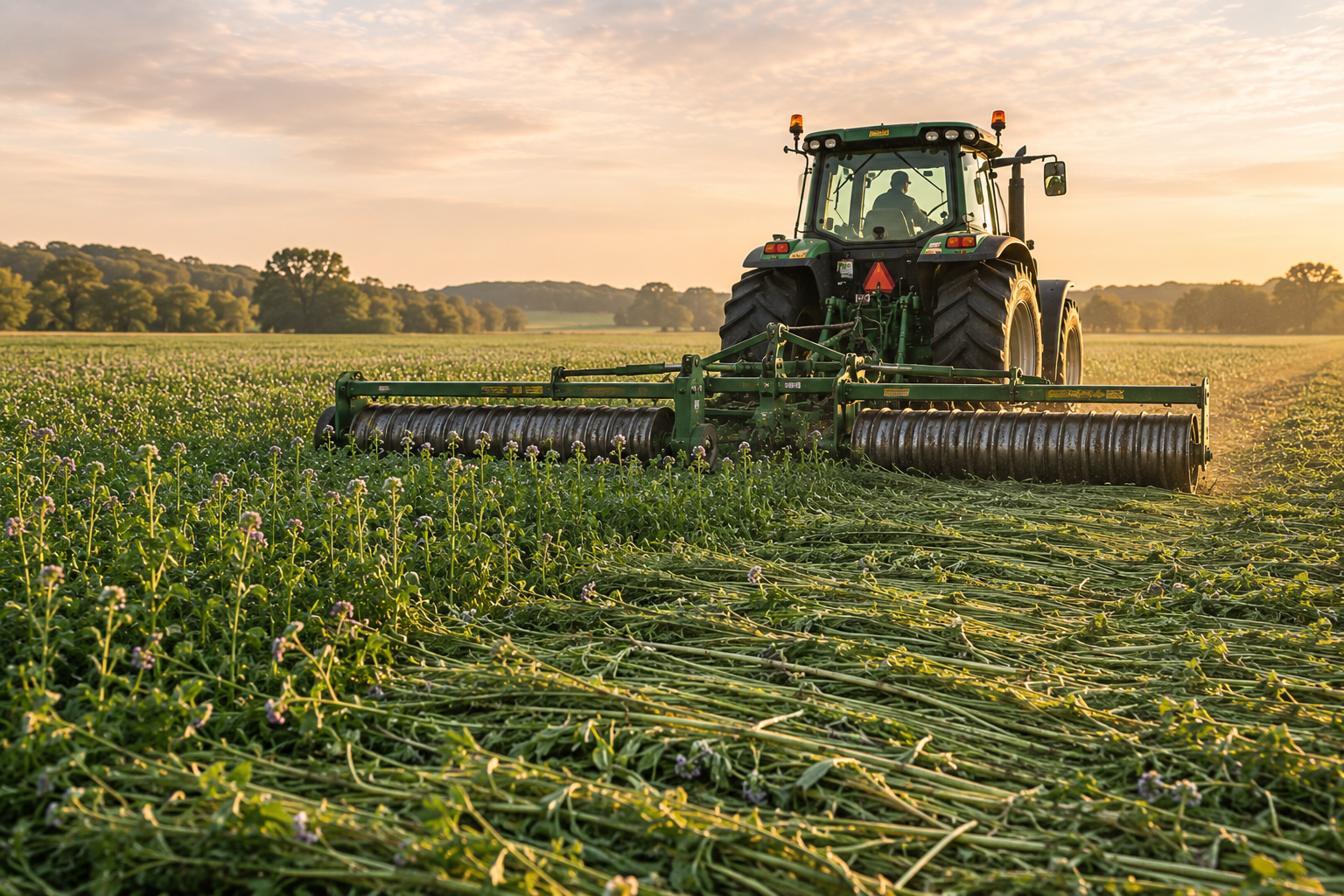
Thoughtful field preparation can help improve establishment, reduce weed pressure, simplify future maintenance, and support long-term productivity.
Before planting begins, it's important to evaluate site conditions, plan orchard layout, and address potential challenges that may affect growth, harvest efficiency, and management costs for years to come.
Whether you're establishing a small demonstration planting or a commercial-scale orchard, investing time in preparation can help set the stage for success.
Why Field Preparation Matters
American elderberry is a perennial crop that may remain productive for many years.
Decisions made before planting can influence:
Plant establishment and survival
Weed management requirements
Irrigation efficiency
Equipment access
Harvest operations
Long-term maintenance costs
Overall orchard productivity
Correcting problems after planting is often more difficult and expensive than addressing them beforehand.
Site Evaluation Considerations
Every property presents unique opportunities and challenges.
Before planting, we encourage growers to evaluate:
-
Elderberry benefits from adequate soil moisture but generally performs best in locations with good drainage and limited standing water.
-
Full sun exposure supports optimal growth, flowering, and fruit production.
-
Field layout should account for natural contours, drainage patterns, and erosion potential.
-
Planning for vehicle access, mowing, maintenance, irrigation installation, and future harvest activities can improve operational efficiency.
-
Current vegetation may influence weed management strategies and site preparation recommendations.
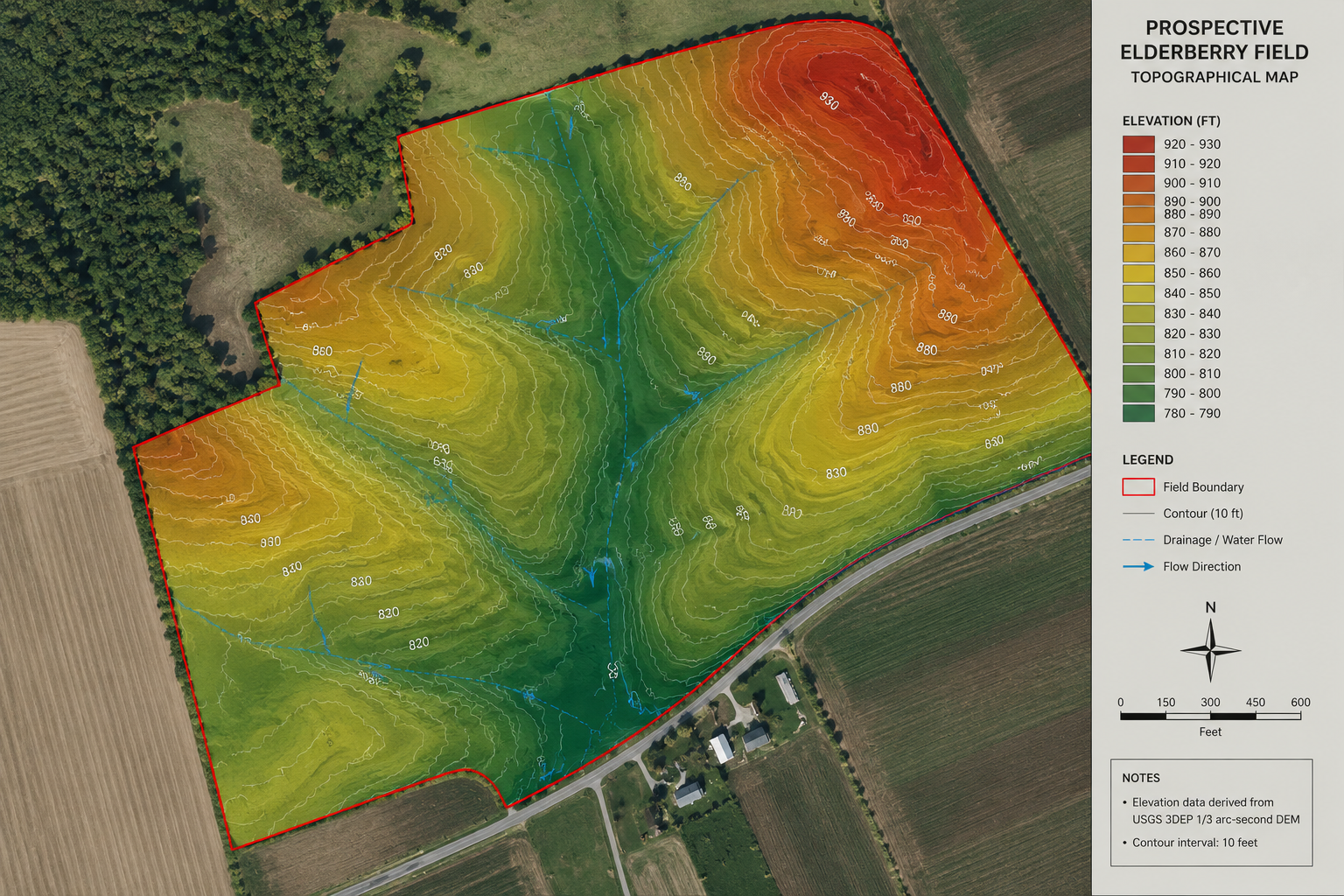
Planning Orchard Layout
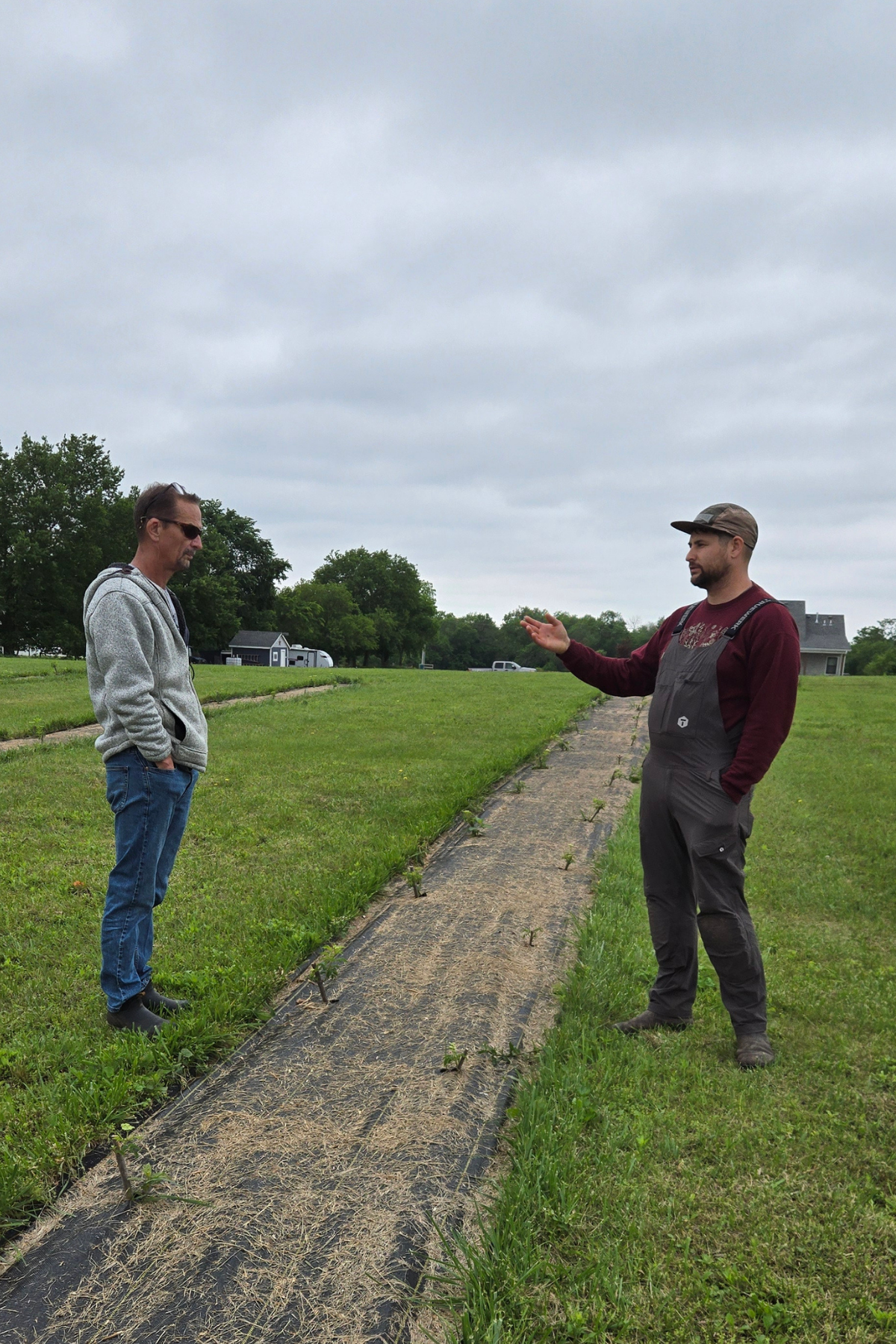
A well-designed orchard can simplify management for years to come.
Planning considerations may include:
-
Row direction may influence sunlight exposure, air movement, irrigation design, and equipment access.
-
Spacing decisions affect plant growth, maintenance requirements, and future harvesting operations.
A common commercial layout is approximately:
4 feet between plants within a row
14 feet between rows
Actual spacing may vary depending on equipment, management goals, and site conditions.
-
While elderberry flowers are self-fertile to varying degrees, planting multiple compatible cultivars is generally recommended to support reliable fruit set and production.
Vegetation Management Before Planting
Reducing competition before planting can significantly improve establishment success.
Depending on site conditions, preparation strategies may include:
Mowing
Vegetation suppression
Cover crop management
Mulching plans
Site cleanup and debris removal
The appropriate approach will vary based on existing field conditions and management objectives.
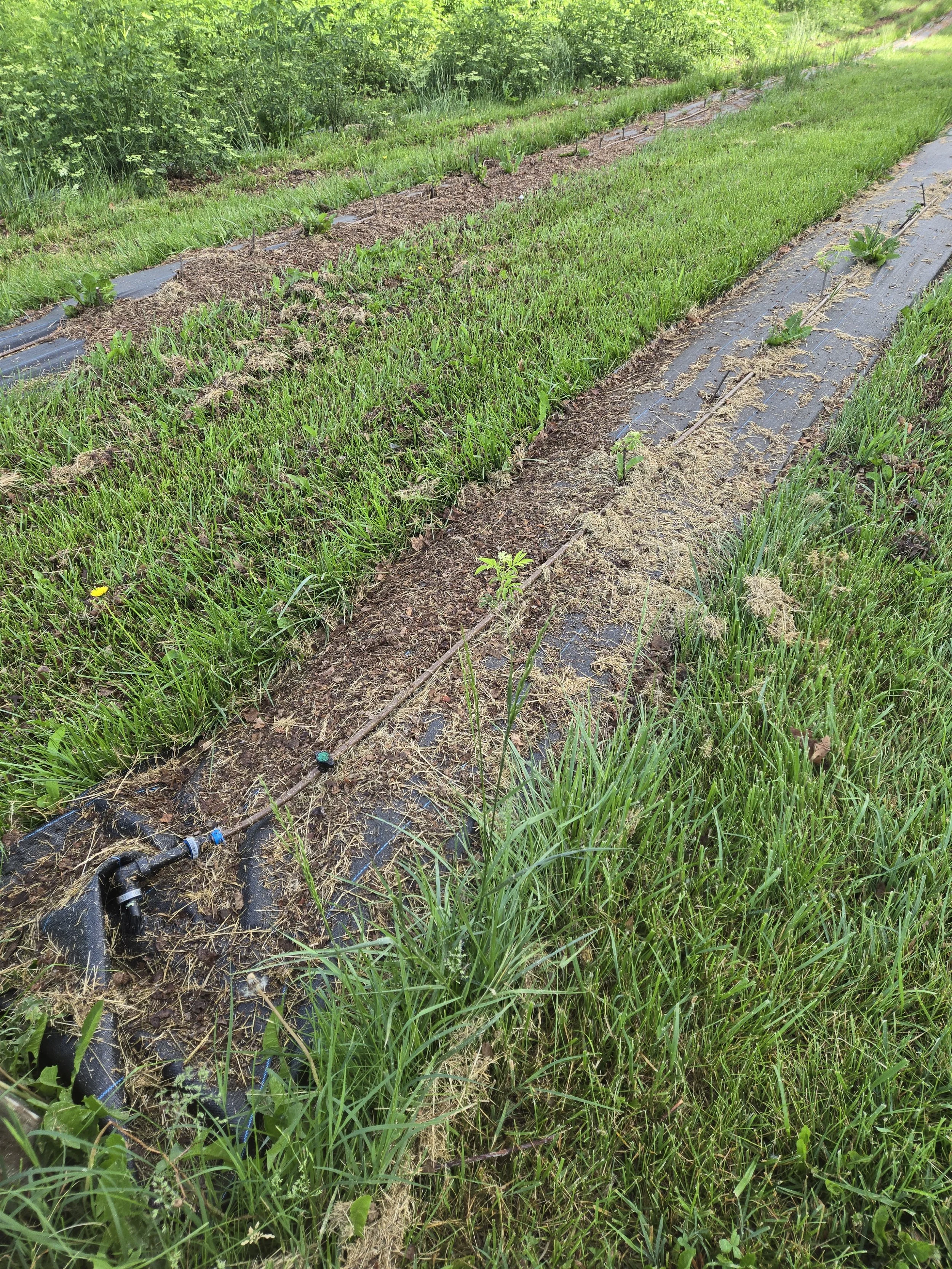
Preparing for Irrigation
Access to water is one of the most important considerations during establishment.
Field preparation provides an opportunity to evaluate:
Water availability
Irrigation routing
Hydrant locations
Mainline placement
Future expansion opportunities
Planning irrigation infrastructure before planting can help avoid costly modifications later.
Field Preparation Services
HAECo can help growers evaluate planting sites and identify factors that may influence orchard establishment.
Services may include:
Site assessment
Orchard layout planning
Spacing recommendations
Pollination planning
Irrigation considerations
Vegetation management guidance
Planting readiness evaluation
Recommendations are tailored to individual properties and production goals.
Ready to Prepare Your Site?
Establishing an elderberry orchard is a long-term investment.
A well-prepared field can help improve establishment, simplify management, and support productivity for years to come.
Contact us to discuss your property and explore field preparation options before planting begins.